

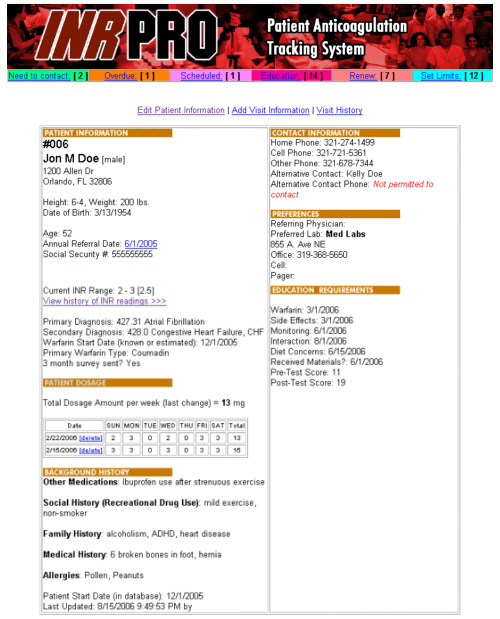
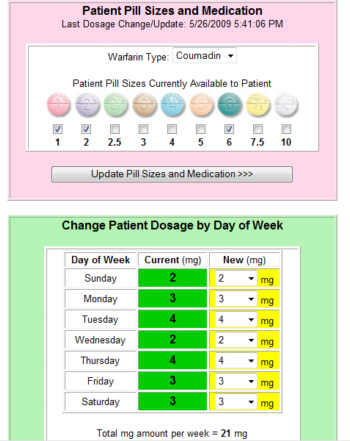
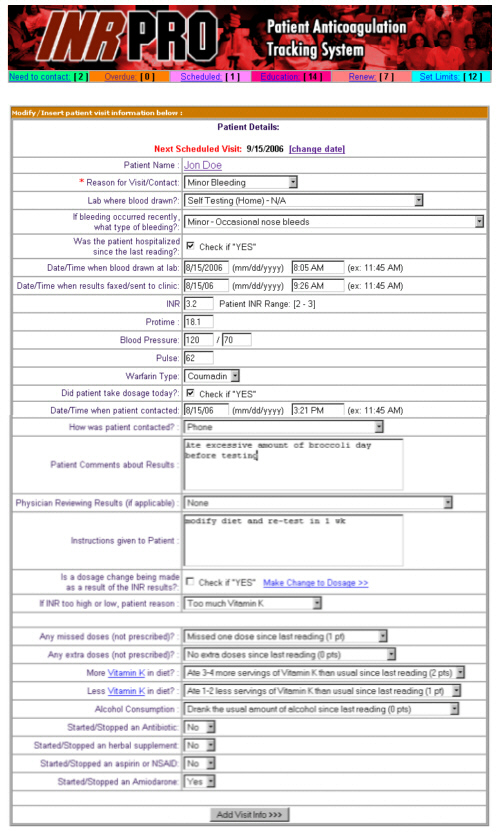
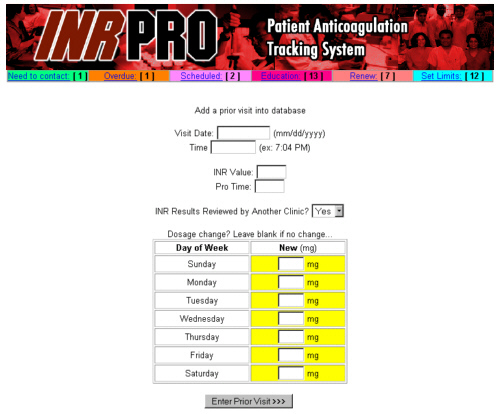
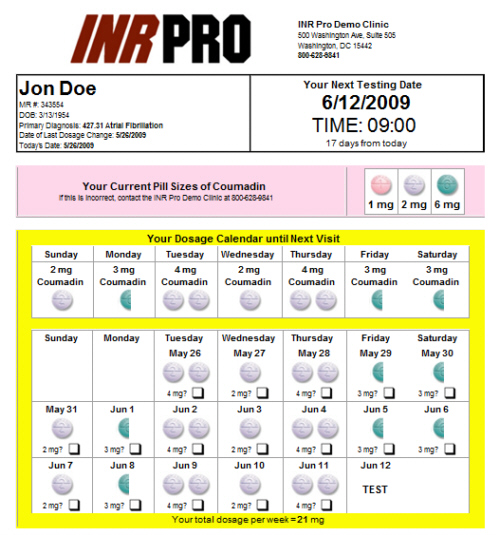
The password-protected, secure web-based system contains all basic health information, including medical facility and patient searches, patient contact information, preferred labs and physicians, dose change history, detailed visit and test result information, patient medications/interactions, and patient medical and family history. You can also keep track of the addresses and contact information for local physicians, labs and pharmacies, and patients, so you can quickly contact them, or track which ones are being used by your patients (download mailing lists to Excel or Word program). INR Pro© also allows you to enter historical INR and protime results for each patient, so you can make the proper data-driven decisions. You can also print off a copy of the dosage change and give to each patient, so they don't forget!
 CoumaCareSM users: You can now convert to INR Pro© without any extra setup charges! No downtime! New features, process management and expanded reporting! Read about our conversion process >>>.
INR Pro© is an ideal solution for:
- Clinics with Point of Care testing and on-site consultations
- Clinics with patient self-testing (who have patients call into an automated phone service, call in directly to a nurse for entry, or enter test results online for review)
- Virtual clinics who review testing performed outside of the clinic (test results submitted to clinic via fax, email or mail)
- Clinics with less than 100 patients (see our pricing structure)
 Two new features have been added to INR Pro©, bridging therapy tracking with calendar printout feature, and Bleeding Risk Index calculations. More info coming soon!
 INR Pro© was developed through an AHRQ grant, focused on improving the number of readmissions related to warfarin patients. This system was a key aspect of the improvements implemented in the grant.
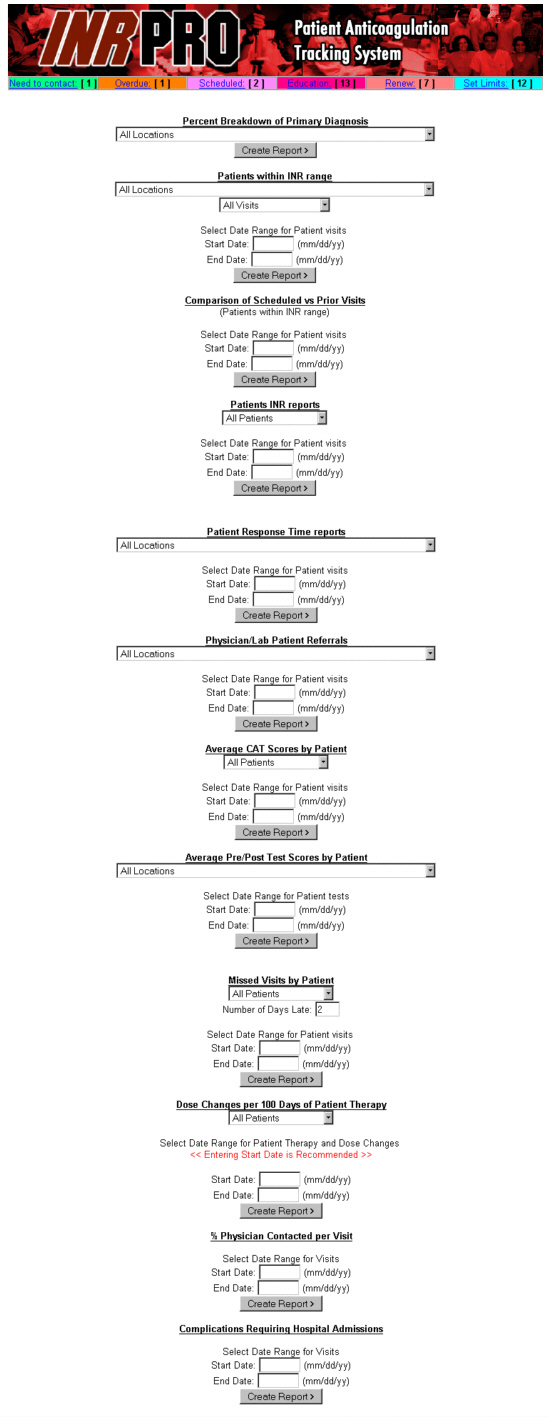
It also has numerous reports, including the following:
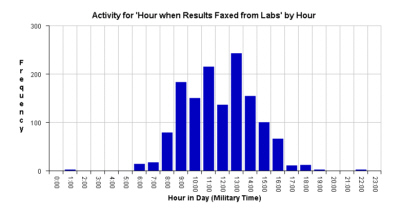
- Number of patient visits per day, and patient activity by hour in the day (notifications, faxes received, blood testing, received from lab)
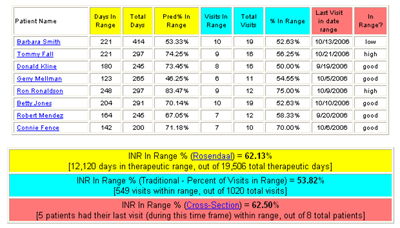
- % patients within INR range (Rosendaal [% of therapeutic days in range], Cross Section [% of last visits in range], and traditional [% of visits in range]). Read why having all three calculation methods is necessary for your patient management system
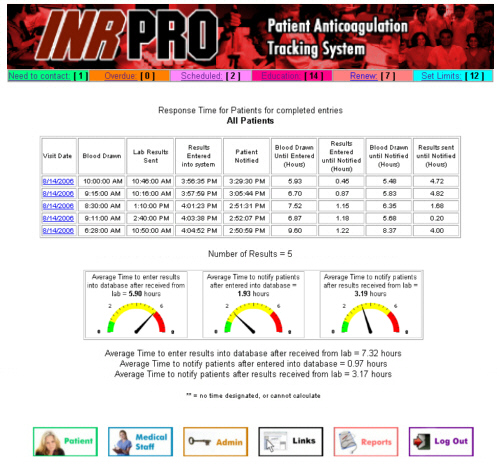
- Cycle Times (test results until communicated back to patient)
- Patient Compliance rating (CAT) scores
- Pre and Post Training Scores
- % Dose Changes per visit
- Complications causing admission
- Medicare reimbursement billing notifications
- Bleeding (BRI) risk and stroke risk (CHADS2 and CHA2DS2-VASc) assessments
- and much more...
 Download INR Pro Reports Handout, showing all our reports on 2 PDF pages >>>
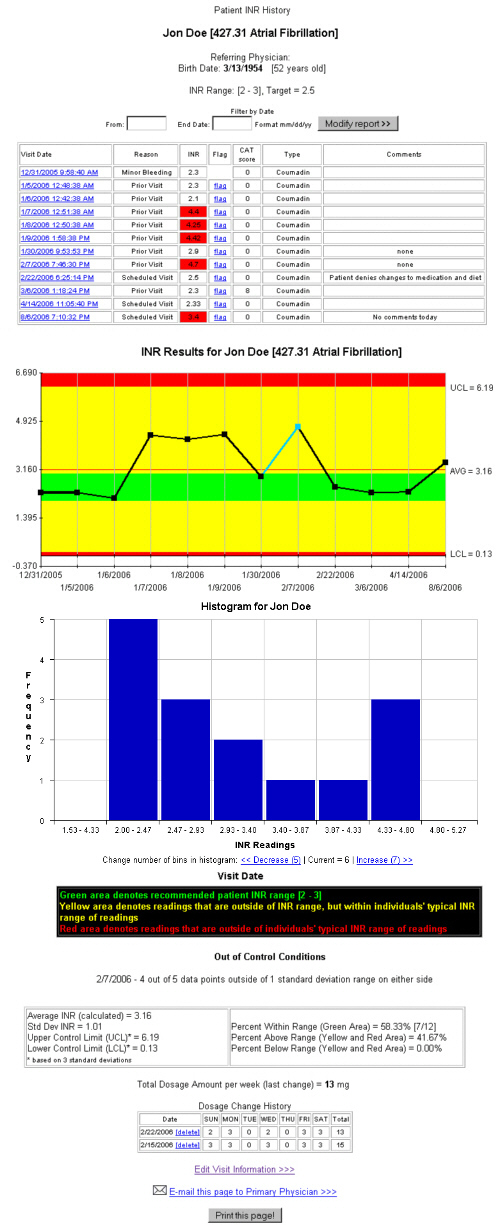
By viewing a chart and histogram of a patient's INR values using Statistical Process Control (SPC), the analyst is able to determine whether the patient's readings are significantly higher/lower than historical results, and compare them to the expected therapeutic range. This helps prevent unnecessary dose changes to the patient.
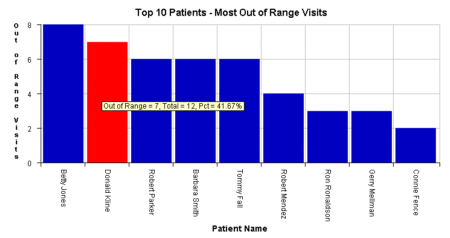
Not every patient has the same needs, and the Patient Priority report provides you with a "Top 10" list of patients with the most Out of Range visits within a specified date range, so you can work closely with them first, without trying to provide additional education to all patients (some may not even need it).
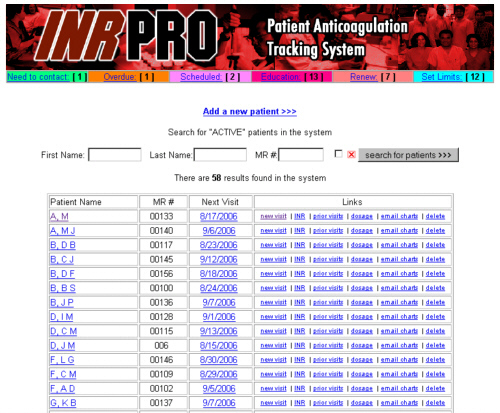
In addition, the system has a tracking mechanism to notify the user of the following...
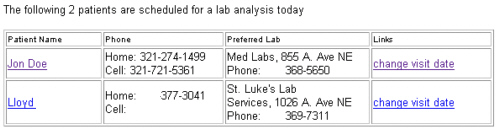
- which patients are scheduled today
- which patient is overdue for their visit
- which patient still needs training or re-testing
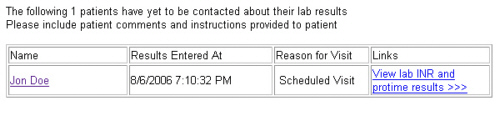
- which patient is waiting to be contacted with their results
- which patient is overdue for thier annual refresher training
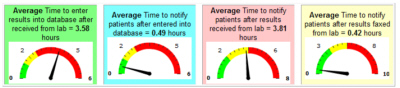
The time tracking features and dashboard views within INR Pro© also help you focus on your "Lean" improvements by reducing the overall time to communicate the INR results back to the patient, which can be hours or days in some clinics. This feature is ideal for those clinics not performing 'Point of Care' testing
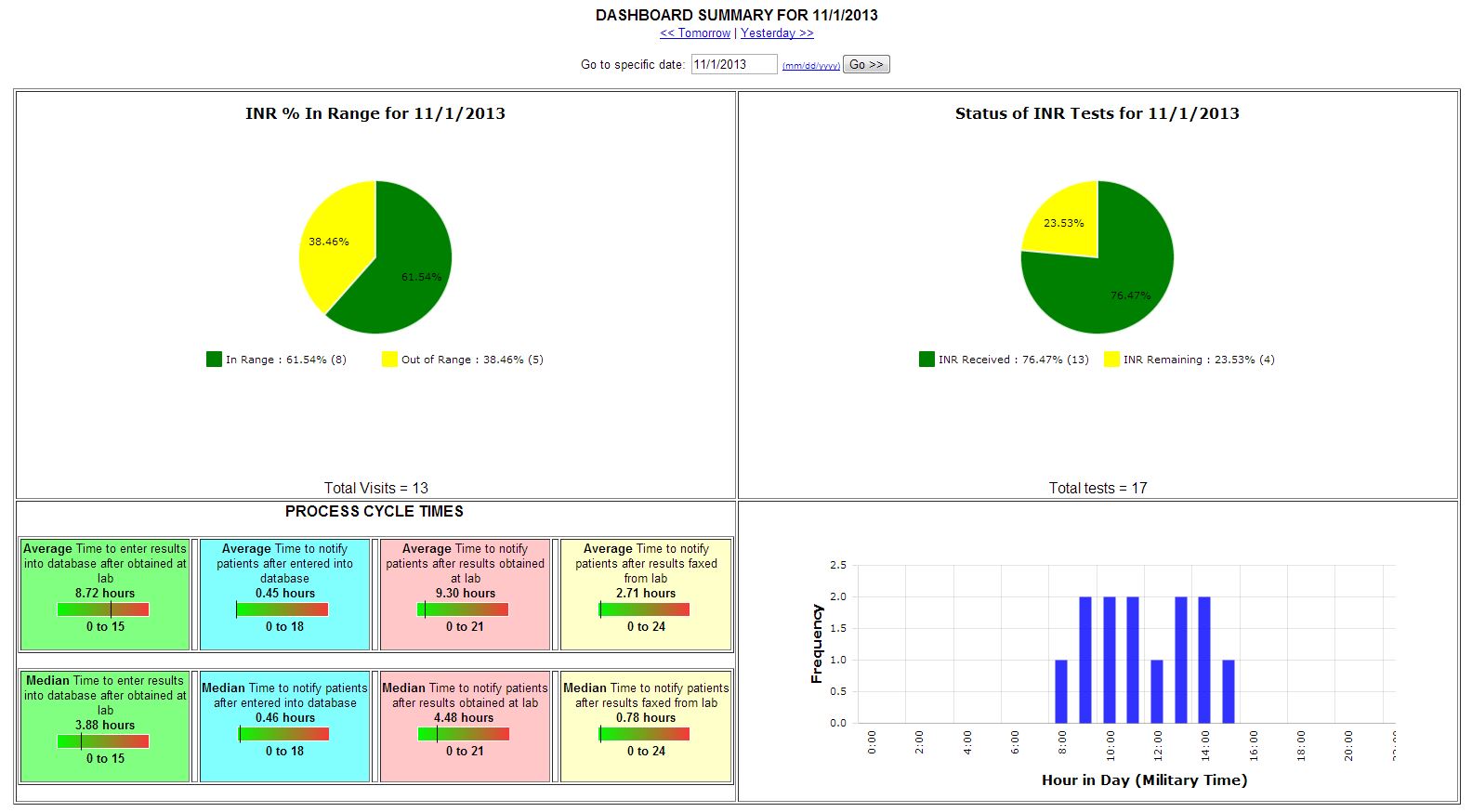
Another lean concept is visual controls, to quickly identify what the status of the process is at a given point in time. In late 2013, we added a dashboard view, to show how many are within their INR range, how many INRs are scheduled each day, the completion/response time averages for the visits each day, and a summary of which hour the patients are being seen. The perfect snapshot view for a manager or clinic director to check on progress.
The system has 4 different access options for those involved in the Warfarin management process.
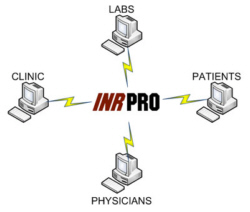
- Clinic Administrators: majority of functionality above, allows edit/add/delete of patient information and test results
- Patients: allows access to patients to input their home-testing results online, download training materials, and view their historical INR results
- Physicians: allows access to only their patient results and charts, and provides email functionality back to administrator (to make changes)
- Labs: allows entering of test results with patient SS number, which will instantly notify administrator of results needing review
Scientific Evidence - Why use these charting techniques?
"Despite the finding that the INR is a weak predictor of hemorrhage overall, small INR increases within the therapeutic range may be the only sign of impending hemorrhage. The bleeding may occur quite rapidly, within a few days of a rise in INR to the upper limit of normal."
-Kucher N, Connolly S, Beckman J, Cheng L, Tsilimingras K, Fanikos J, Goldhaber S. International Normalized Ratio Increase Before Warfarin-Associated Hemorrhage. Archives of Internal Medicine. 2004;164;2176-2179
Statistical Process Control (SPC), in conjunction with trend analysis techniques (Western Electric Rules or Nelson Rules) can identify slight drifts and trends in the INR results (out of control conditions), which can prevent the onset of complications, such as hemorrhage and bleeding in certain patients.
SPC is a key tool within Six Sigma. Six Sigma is a performance improvement system that utilizes data and statistical analysis to measure and improve operational performance and practices. The development of INR Pro© utilized Six Sigma techniques and methodology. An AHRQ paper will be published in 2008 to summarize the development of this system, and the use of Six Sigma to improve anticoagulation management. In addition, the American College of Chest Physicians (ACCP) recently conducted a study to show the benefits of a Six Sigma initiative to improve patient care. To learn more about how you can get help with Lean and Six Sigma, visit our consulting page.
Customization - Need something customized for your clinic or business needs?
We realize one size does not fit all, so we will be glad to talk to you about how your needs can be addressed with a modification to our system. Don't develop something from scratch. We probably have a large portion of your needs already implemented on another customized version of the system. Contact us with questions or changes you would need, and we can provide a quote within a few days.




INR Pro highlighted in latest issue of Group Practice Journal!
Latest Articles
INR Pro featured in medical group magazine
Rosendaal method for patient TTR calculations available in Excel template
New INR data reports available from your current anticoagulation system

Monitored by Site24x7
Uptime